
Best Garden Tools for Seniors With Weak Hands
Disclosure: Some of the links in this article may be affiliate links, which can provide compensation to me at no cost to you if you decide to purchase. As an Amazon Associate I may earn on qualifying purchases
Gardening is one of the best activities for staying active as we age. As both a Physical Therapist and a Master Gardener, I've seen firsthand how gardening improves strength, flexibility, balance, and overall well-being.
Unfortunately, many gardeners begin to struggle with weak grip strength, arthritis, tendonitis, or painful joints and worry they may have to give up the hobby they love.
The good news is that the right tools can make a tremendous difference.
Today's gardening products are designed with comfort, ergonomics, and accessibility in mind. Whether you're dealing with arthritis, reduced hand strength, or simply want to make gardening easier, there are tools available that can help you continue gardening safely and comfortably.
Research has shown that gardening provides significant physical and mental health benefits for older adults, including improved physical activity levels, reduced stress, and enhanced quality of life.
That's why finding ways to stay active in the garden is so important.
Here are my favorite garden tools for seniors with weak hands.
What Makes a Garden Tool Senior-Friendly?
Not all gardening tools are created equal. When evaluating tools for older gardeners, I look for several important features:
Lightweight construction
Ergonomic handles
Cushioned grips
Spring-assisted mechanisms
Battery-powered operation
Long handles to reduce bending
Easy-to-use controls
These features reduce stress on the joints while minimizing the force needed to perform gardening tasks.
1. Grippy Garden Gloves
Many gardeners overlook the importance of a good pair of gloves.
As grip strength decreases, holding onto tools can become difficult. A quality pair of grippy gardening gloves can improve traction between your hand and the tool, reducing the amount of force required to maintain control.
Look for gloves with:
Textured rubberized palms
Flexible materials
Snug fit without restricting movement
Breathable fabric
A good pair of gloves can reduce hand fatigue and help prevent tools from slipping, especially when working in wet conditions.
Garden Gloves don't have to be expensive to work well.
2. Felco Hand Pruners
If I could recommend only one hand pruner brand, it would be Felco.
I've tested many pruners over the years, and Felco consistently stands out for comfort, durability, and cutting performance.
For gardeners with smaller hands or reduced grip strength, the Felco 6 is often my top recommendation. If you have small hands, check out this article to get the right size for you. If you don't know what size to get, I have created an easy to follow guide to help you
The ergonomic design allows the hand to stay in a more natural position while cutting, reducing strain on the fingers and wrist.
Features I love include:
Ergonomic handles
High-quality steel blades
Shock absorbers
Replaceable parts
Smooth cutting action
The spring-assisted mechanism helps reduce the effort required for repetitive pruning tasks.
For gardeners who still have moderate hand strength but want a professional-quality pruner, Felco pruners remain one of the best investments available.
3. Battery-Powered Electric Pruners
For gardeners with arthritis or significant hand weakness, electric pruners can be game-changing.
Instead of repeatedly squeezing a hand pruner hundreds of times, electric pruners perform the cutting with the push of a trigger.
As a physical therapist, this is one of the most impactful advancements I've seen for gardeners struggling with painful joints.
Benefits include:
Minimal gripping force required
Less finger and thumb strain
Faster pruning
Reduced hand fatigue
Ability to prune for longer periods
Many modern battery-powered pruners can easily cut branches up to one inch thick with little effort from the user.
If hand pain has limited your ability to prune shrubs, roses, fruit trees, or perennials, electric pruners are worth considering.
4. Stand-Up Weed Pullers
Weeding is often one of the most physically demanding gardening tasks.
Traditional hand weeding requires:
Kneeling
Gripping weeds tightly
Pulling repeatedly
Twisting the wrist
Stand-up weed pullers eliminate much of that strain.
These tools allow you to remove dandelions and other deep-rooted weeds while standing upright. Most models use a foot pedal to drive claws into the soil and capture the root.
Advantages include:
No kneeling
No bending
Minimal hand force required
Less back strain
Easier on arthritic joints
For gardeners with weak hands, these tools can dramatically reduce discomfort while improving efficiency.
Here are three I have reviewed on Youtube:
Check Each of these Stand up Weed pullers here:
5. Stand-Up Crack Weeders and Crevice Weeders
Weeds growing between pavers, sidewalks, driveways, and patios can be especially frustrating.
Many gardeners resort to kneeling and pulling weeds by hand, which can aggravate both hand and back pain.
Stand-up crack weeders solve this problem by allowing you to remove weeds while standing.
Look for models with:
Adjustable handle lengths
Comfortable grips
Sharp stainless steel blades
Lightweight construction
The ability to stand upright while working reduces stress on the spine and decreases the need for forceful gripping.
For many seniors, this becomes one of the most frequently used tools in the garden shed.
This is the one I like the most:
6. Lightweight Leaf Blowers
Heavy yard equipment can quickly become difficult to manage.
A lightweight leaf blower is often a better choice than a rake for gardeners with hand weakness, shoulder pain, or arthritis.
When selecting a blower, I encourage seniors to focus on weight rather than maximum power.
Features to prioritize:
Lightweight design
Variable speed control
Comfortable grip
Balanced weight distribution
Easy battery installation
A blower that weighs just a few pounds can save substantial energy and reduce stress on the hands, wrists, elbows, and shoulders.
I've tested several lightweight models and found that comfort often matters more than raw blowing power for older gardeners.
Here are the links to the ones I tested:
7. Lightweight Garden Tillers
Digging and soil preparation can place tremendous stress on the hands and upper body.
A lightweight tiller can reduce the amount of manual labor required when preparing garden beds, raised beds, and planting areas.
Benefits include:
Less digging by hand
Reduced repetitive motion
Faster soil preparation
Improved planting efficiency
Look for models that are lightweight, easy to maneuver, and equipped with comfortable handles.
Smaller tillers are often ideal for raised bed gardeners and seniors who want assistance without managing a large, heavy machine.
8. Ergonomic Hand Tools
Not every task requires a powered tool.
Simple ergonomic hand tools can make gardening much more comfortable.
Research on joint protection strategies consistently supports using larger grips because they reduce the force required by the smaller joints of the fingers and thumb.
Check out this article I wrote on how to choose the right ergonomic tool for you.
Look for:
Larger handle diameters but still fit your hand for easy grip
Soft cushioned grips
Angled handles
Lightweight materials
Long-handled options
These features help distribute pressure more evenly across the hand and reduce stress on painful joints.
Many gardeners are surprised by how much difference a simple ergonomic handle can make.
9. Garden Carts and Rolling Garden Seats
Sometimes the best way to protect your hands is to reduce the amount of carrying and lifting you do.
A rolling garden cart or garden seat can help transport:
Soil
Plants
Fertilizer
Hand tools
Harvested vegetables
These tools also provide a place to sit while gardening, reducing fatigue and improving comfort during longer gardening sessions.
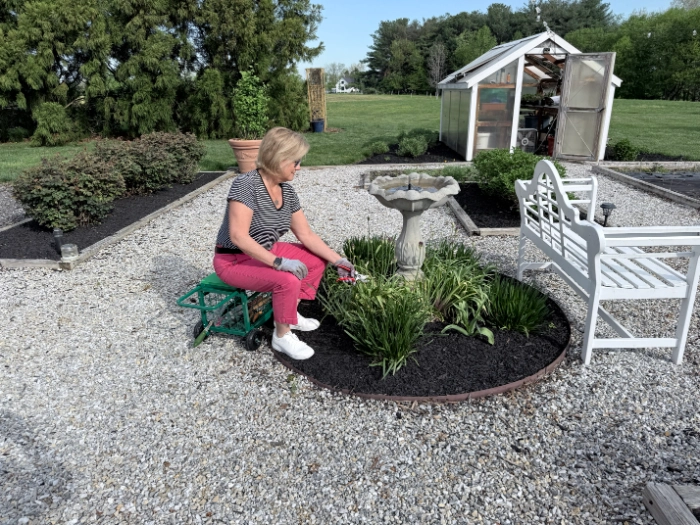
For gardeners with arthritis, back pain, or reduced endurance, they can be invaluable.
Why Gardening Is Worth Continuing
Many seniors tell me they're thinking about giving up gardening because it has become too difficult.
I encourage them not to quit before exploring better tools.
Research has shown that gardening supports physical activity, mobility, emotional well-being, and overall quality of life in older adults. Gardening combines movement, fresh air, sunshine, and a sense of accomplishment that few hobbies can match.
The goal isn't to garden the way you did 20 years ago.
The goal is to adapt.
By choosing tools that reduce strain on the hands, wrists, shoulders, and back, many gardeners can continue enjoying their gardens for years to come.
Final Thoughts
As both a Physical Therapist and Master Gardener, I've learned that the right tool can often be the difference between giving up gardening and continuing to enjoy it.
If weak hands, arthritis, or joint pain are making gardening more challenging, start by replacing the tasks that cause the most discomfort. Battery-powered pruners, stand-up weed pullers, ergonomic hand tools, lightweight leaf blowers, and rolling garden carts can dramatically reduce strain and help you garden more comfortably.
Gardening should be enjoyable, not painful. With the right tools, you can continue growing flowers, vegetables, and beautiful landscapes for many years to come.
Here are some other garden articles for YOU:
VEGO Gardening in 2 feet with rolling Planter
How to Plant a Cut Flower Garden Easily
Review of 3 Best Garden Kneeler Seats for Seniors
The Best Hand Pruners for Arthritic Hands: A Review
Exploring The Best Long Handled Pruners for Senior Gardeners
Disclosure: Some of the links in this article may be affiliate links, which can provide compensation to me at no cost to you if you decide to purchase. As an Amazon Associate I may earn on qualifying purchases